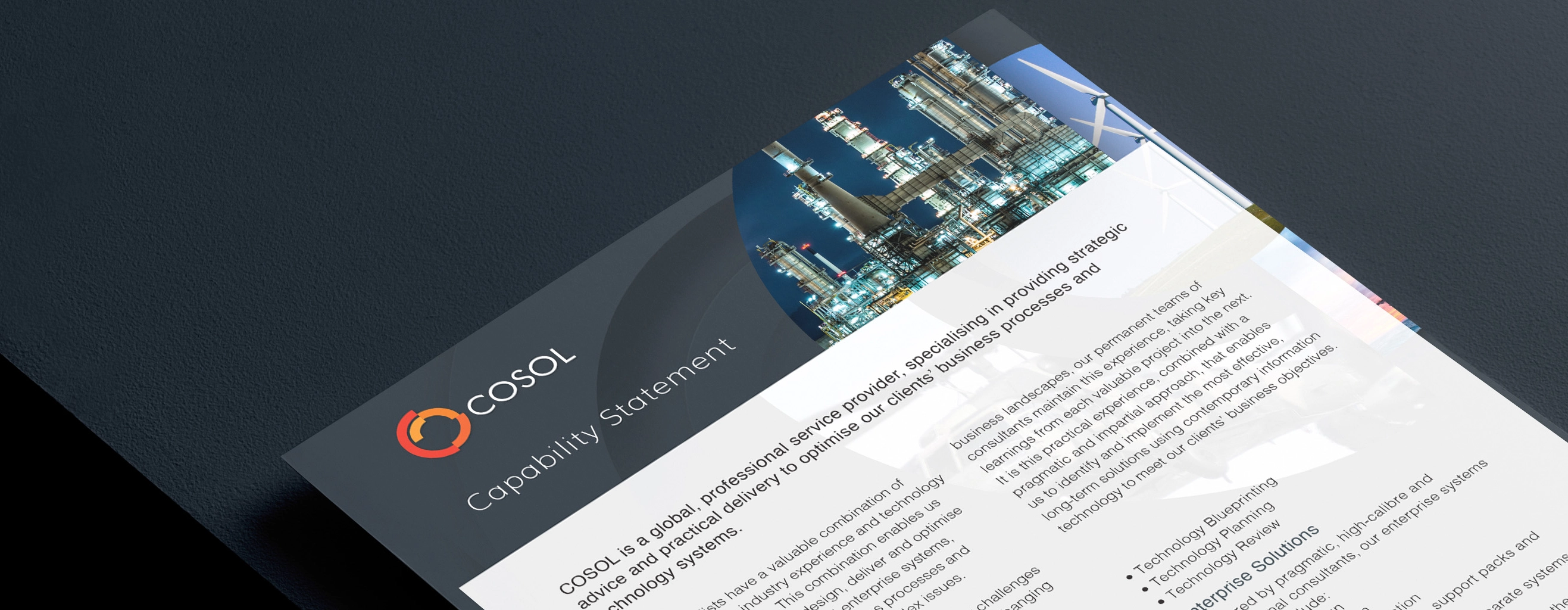
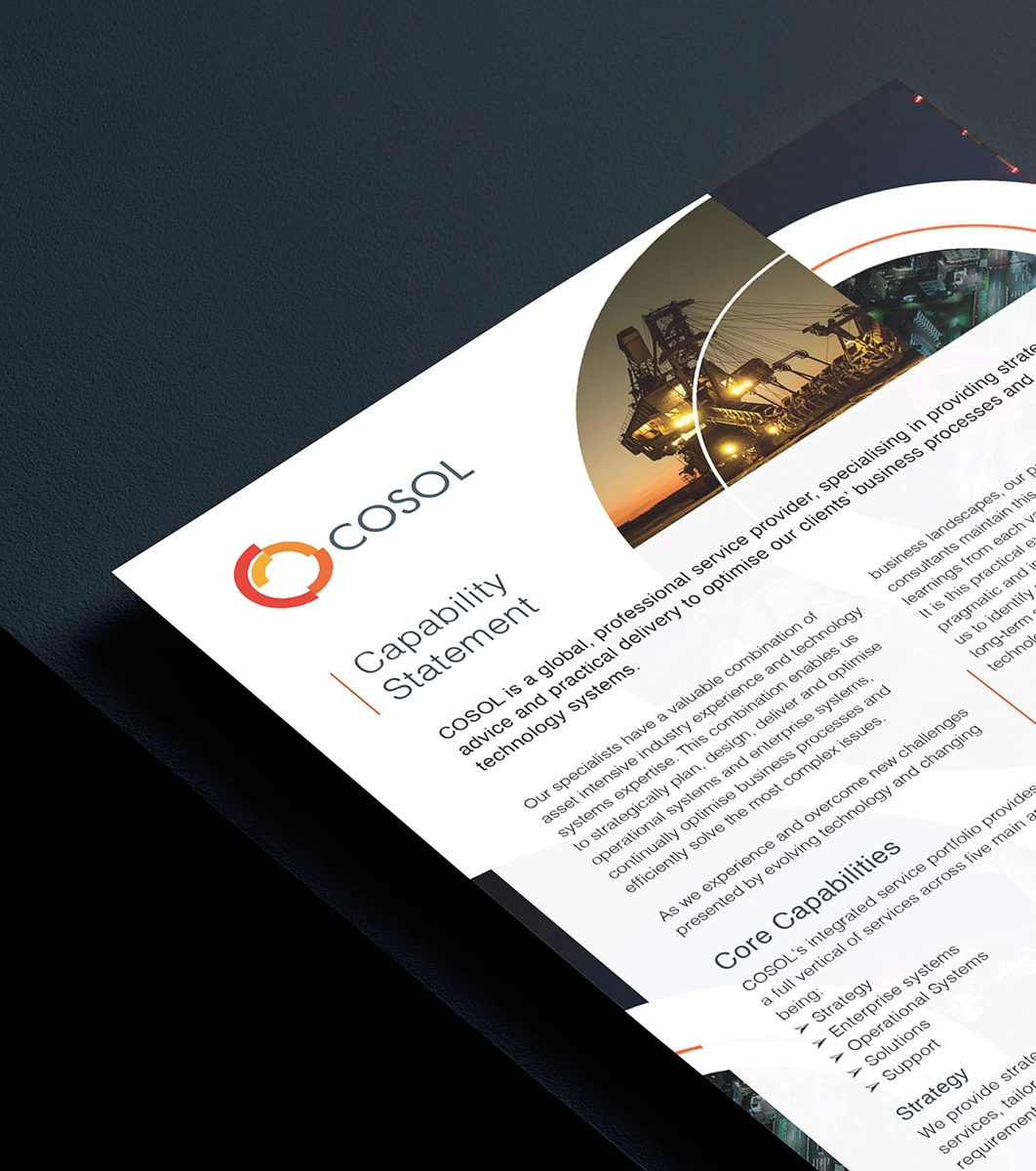
Capability Statement Design.

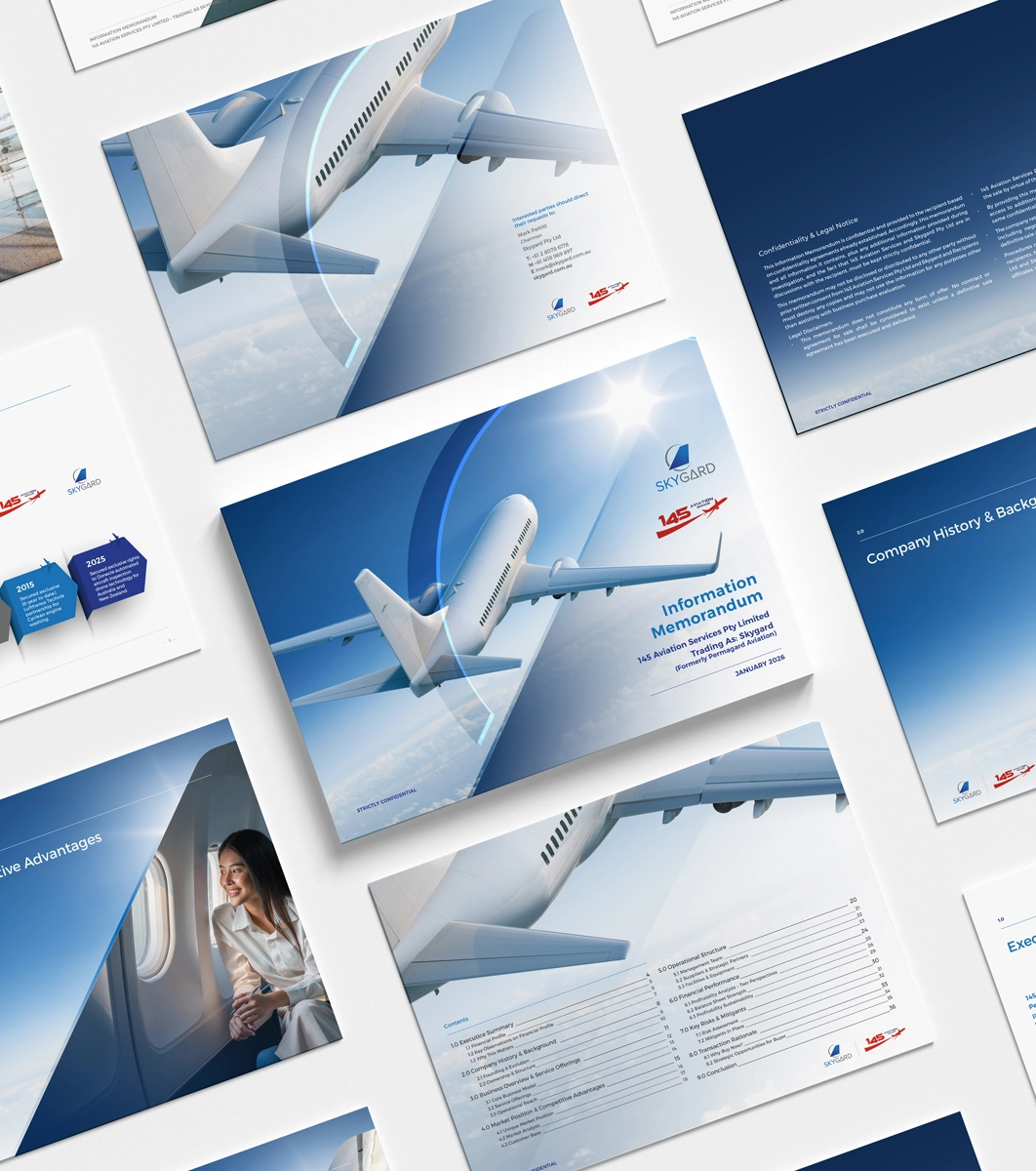
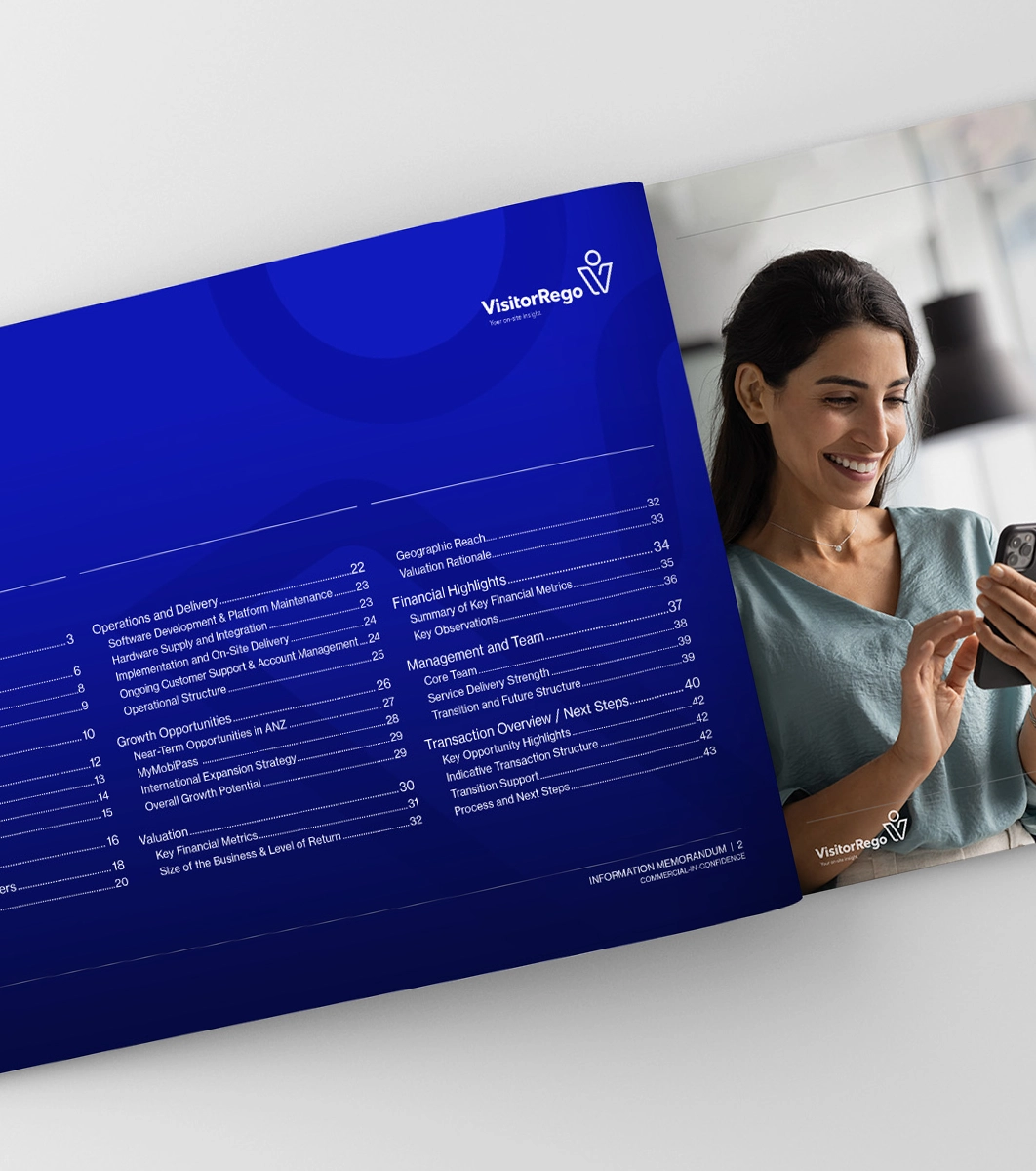
An example of a Capability Statement.

20+ years of experience | Australia-wide | Direct-to-designer studio

Trusted by businesses across mining, property, agribusiness, government, and corporate sectors.

20+ years · Direct to Erica · NDA-first for competitive tenders · Built on Adobe InDesign, never Canva · Australian-owned · Files stored on Australian infrastructure, never fed into external AI training.

What separates a capability statement that gets shortlisted from one that gets filed.

"Erica Miller Design has produced an outstanding IM document for us, that is fresh, modern and very engaging in its design, which is quite an achievement considering our business is not exactly filled with colour and excitement!
She is also very professional, has an excellent eye for design and is articulate with her communication."

Mark Pettitt
Chairman  — Skygard
SEND A BRIEF
Select
Advertising
Branding
Digital
Document Design
Where did you find Erica Miller Design?
Thank you! We’ve received your message.
Have a great day!
Oops! Something went wrong while submitting the form.

A clear, collaborative approach.

01

Discovery

WEEK 1

15-minute discovery call. Erica reads any draft you have, names the document's audience and deadline, and confirms what's needed. NDA is signed before the call if the material is sensitive. You leave with a same-day indicative price and a fixed delivery date.

02

Design

WEEKS 1–3 (faster on a tight deadline)

Cover and section opener concepts first, then a sample spread that locks the typographic system, data design and illustration approach. The rest of the document follows that system page by page. Two structured rounds of feedback against the chosen direction.

03

Delivery

FINAL WEEK

Press-ready PDF, digital PDF, and editable PowerPoint or InDesign master, where the licence allows. Print management coordinated with the studio's Brisbane print partners if you need physical copies for a board or stakeholder distribution.

FAQ's

What does a capability statement do that a company profile or brochure can't?

A capability statement is a procurement document, not a marketing piece. Its job is to clear the procurement officer scan inside 30 seconds and survive the panel's compliance check. A company profile introduces, a brochure persuades, a capability statement qualifies. Structure, proof, and compliance details are the design problem — not aesthetics for their own sake.

What's included in a tender-grade capability statement?

  • Business overview (one paragraph, not three)
  • Core services framed as outcomes rather than activities
  • An experience matrix with project metrics
  • Anonymised or attributed case studies
  • Certifications and accreditations panel (ISO, ICN, Tier-1 prequal numbers)
  • Compliance contact block (ABN, registered address, key personnel)
  • Clear next-step language
  • Visual hierarchy is the difference between "fits the brief" and "gets shortlisted.

How much does a professionally-designed capability statement cost?

  • Founder/SMB tier from $890 (4-6 pages, design-only).
  • Tender-grade from 2,490 (10-18 pages, includes experience matrix, anonymised proof, compliance panel).
  • Scoped corporate tier for ICN registration packs, mining Tier-1 prequalification, defence subcontractor documents — quoted on brief, typically $4,500-$12,000 depending on illustration, financial data design, and integration with related documents (company overview, tender response, IM).

Do I actually need one to apply for an Australian government tender?

It's not always a formal requirement, but it's almost always the first thing procurement officers ask for — even before the formal tender response. A strong capability statement filed with your initial expression of interest can be the difference between making the shortlist and not. For ICN registration, Tier-1 mining prequalification, 10, and most defence subcontractor pathways, a current capability statement is effectively mandatory.

How long does it take?

Two to four weeks for the founder/SMB tier from content sign-off. Tender-grade documents run three to five weeks. Scoped corporate packs run four to eight weeks, depending on illustration and data design depth. Deadline-driven engagements — where the procurement window is fixed — are quoted with a date-locked timeline before the engagement starts. Capital-raise and tender deadlines have been met within a fortnight when the brief warranted it.

Is the work confidential? Can NDAs be signed before the discovery call?

Yes to both. Competitive tender material, unfiled certifications, and predisclosure partnership decks all run under NDA — confidentiality is built into how every brief is handled, not a paid extra. Files are stored on Australian infrastructure, never reused in third-party marketing without written permission, and never fed into external AI training tools. NDAs can be in place before the scoping call when the material is competitive or sensitive.

Can the design match an existing brand identity?

Yes — and that's the default. The studio works from your existing logo, style guide, and colour system. Where the brand identity itself is the weak link (dated typography, weak applications, inconsistent voice), the discovery call surfaces that a brand lift can run alongside the capability statement in the same engagement rather than as a separate rebrand.

What content do I need to provide?

  • A draft narrative
  • Logos and any existing brand assets
  • A list of relevant projects with rough metrics (contract value, scope, dates)
  • Any certifications or accreditations
  • The procurement audience you're aiming at

Content doesn't need to be final — most engagements involve significant content shaping during design, where structure suggests what content is missing.

Can copy be written if I don't have it?

Design is the core of the work, and that includes shaping how content reads on the page — hierarchy, structure, emphasis. Where copy needs to be written rather than refined, Erica brings in trusted Brisbane and Sydney copywriters who already know the studio's process and quality bar. Bring a rough draft or a list of bullet points to the scoping call; the rest gets mapped from there.

What software is the document built in?

Adobe InDesign for layout, Illustrator for any custom illustration or diagrams, and Photoshop for imagery. The reason this matters: capability statements built in Word or Canva can't carry the typographic discipline a tender-grade document needs, and the file structure can't be cleanly handed off for future updates. InDesign source files are part of every delivery, so future revisions don't require starting from scratch.

How many revisions are included?

Two structured rounds — one for major edits (hierarchy, structure, narrative emphasis) and one for minor (typography refinements, copy edits, final polish). Both run in a single shared file with tracked changes. Beyond two rounds is quoted; this is rare on founder/SMB tiers and more common on scoped corporate packs where additional stakeholders enter the review.

What happens after delivery?

A handover call walks through the file structure, the editable master, and how to make future updates. Press-ready and digital-distribution PDFs delivered. Tender-grade documents typically need refresh cycles every 12-18 months as new projects close — those are handled on a retainer or per-piece basis, and the InDesign source file you have means the studio (or any future designer) can update quickly without rebuilding.

Need a capability statement alongside a tender response or company overview?

Capability statements rarely ship alone. Most procurement engagements need a capability statement plus a company-overview document, a tender response, and sometimes an IM if the work involves a JV or capital-raise component. All three are designed in the same scope with the same designer — consistent typography, consistent narrative architecture, and faster turnaround than three separate engagements.
Our website uses intelligent chatbots powered by Ultimo Bots to improve customer service.