
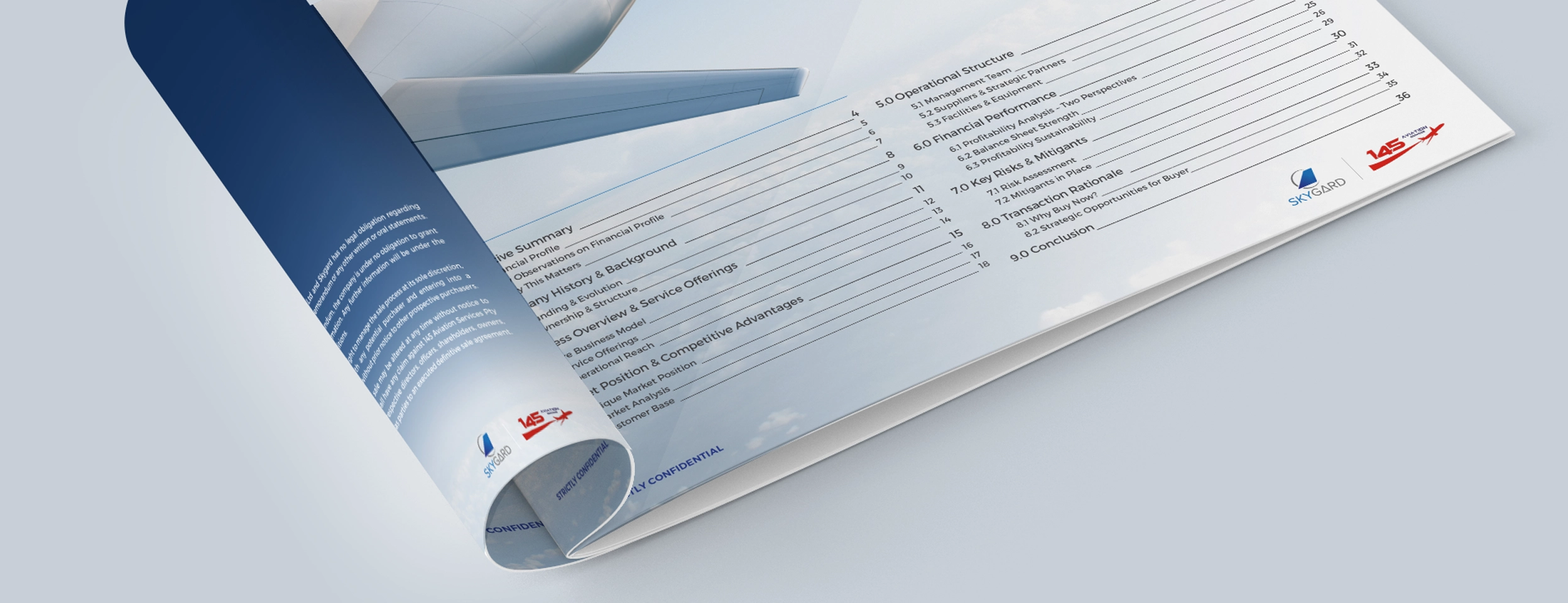
If you’re raising capital or selling a business in Australia, an Information Memorandum (IM) is one of the most important tools in your kit. Think of it as your business story—structured, professional, and designed to give investors the clarity they need to make informed decisions. But what should an IM actually include?
At Erica Miller Design, I specialise in creating IM's that are not only visually appealing but also easy to navigate. Here are the 10 key elements every Information Memorandum should include:
1. Executive Summary
- One page that explains the opportunity, what your business does, why the timing is ideal, how it generates revenue, and what you are offering to investors.
- Provide a concise investment request, outlining the raise amount, security type, valuation or pricing, and intended use of funds.
- Make it compelling; this is the first section investors will read.
2. The Offer
- Describe the securities on offer (ordinary shares, preference shares, notes, or other instruments) and key terms.
- Outline minimum investment amount, round size, pre- and post-money assumptions, and any conditions precedent.
- Summarise investor rights if relevant — dividends, liquidation preferences, anti-dilution, information rights, and board or observer terms.
3. Business Overview
- Share your mission, history, and milestones to date.
- Detail products or services, pricing, and unit economics.
- Explain your business model, go-to-market strategy, partnerships, and distribution channels.
4. Market Analysis
- Present the size of the addressable market and growth drivers.
- Map competitors (direct and indirect) and highlight your competitive advantages.
- Outline customer segments and traction, such as revenue growth, retention rates, pipeline, or key contracts.
5. Management Team
- Introduce founders and key management, including relevant experience and roles.
- Highlight board composition and advisors if applicable.
- Provide a high-level company structure and cap table summary.
Designing one of these against a deal deadline? The 15-minute scoping call returns an indicative price the same day — book a time, or see how EMD designs Information Memorandums.
Earlier in the journey? The IM Readiness Pack is a self-serve planning workbook that gets your content investor-ready before design — these 10 elements expanded into checklists, a data-room list and a raise timeline. Instant download.
6. Financial Overview
- Include historical financials (at least the past 2–3 years or since inception), showing revenue and key costs.
- Provide forecasts and assumptions (typically 12–36 months), cash runway, and break-even outlook.
- Highlight key performance indicators (e.g., CAC, LTV, gross margin) with brief explanations.
- This is where design earns its keep — bespoke financial-data design turns dense tables into pages investors actually read.
7. Use of Funds
- Outline where the capital will be allocated — product development, hiring, marketing, working capital, etc.
- Share the milestones you expect to achieve with this raise.
8. Legal and Regulatory Information
- Include business structure, key licences or permits, and their status (registered, pending, or not required).
- Summarise intellectual property owned or licensed, including registers, applications, assignments, and any gaps.
- Highlight material contracts, such as top customers, suppliers, or leases, and note any change-of-control clauses.
9. Risks
- Provide honest and balanced disclosure of commercial, operational, financial, legal, and regulatory risks.
- Explain the mitigations you are taking — investors value transparency and a realistic plan.
10. Appendices & References
- Include glossaries, technical diagrams, detailed financial tables, and references for market data.
- Consider linking a secure data room for deeper due diligence, with controlled access.
Ready to make your Information Memorandum stand out? Let’s turn your ideas into something investors won’t ignore. Start with the Information Memorandum design service — scoped in a 15-minute call, priced the same day, NDA before you send a page. Prefer to prepare first? Start with the IM Readiness Pack.


